Currently Empty: R0.00

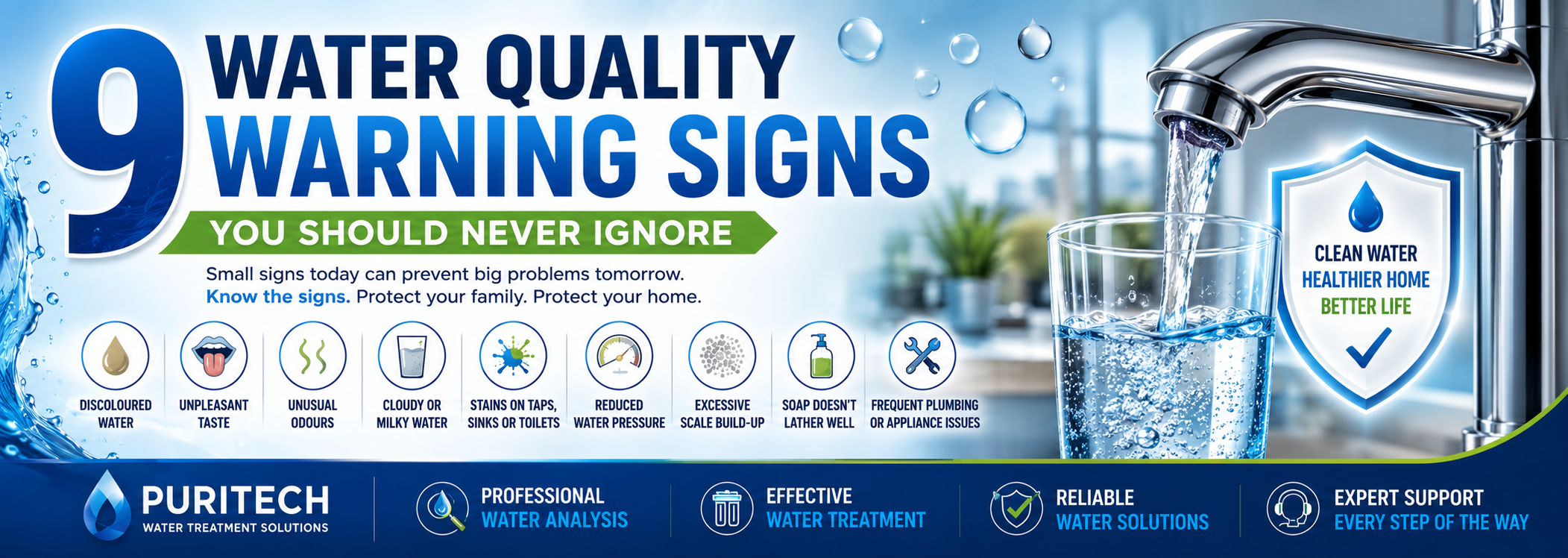
9 Water Quality Warning Signs You Should Never Ignore
Water often appears clean, but looks can be deceiving. Many water quality problems develop gradually, making them easy to overlook until they begin affecting your health, plumbing or appliances. Recognising water quality warning signs early can help prevent costly repairs and ensure your water remains safe and reliable.
Whether your water comes from a municipal supply, borehole or rainwater harvesting system, paying attention to changes in appearance, taste and performance is essential. Here are nine water quality warning signs every homeowner and business should know.
1. Discoloured Water
One of the most obvious water quality warning signs is water that changes colour.
You may notice:
- Brown or reddish water
- Yellow water
- Greenish water
- Black particles
These changes may indicate rust, sediment, ageing infrastructure or naturally occurring minerals that require further investigation.
2. Unpleasant Taste
Clean drinking water should have a fresh, neutral taste.
If your water suddenly tastes:
- Metallic
- Salty
- Bitter
- Chemical
- Earthy
it may indicate changes in water quality or contamination that should not be ignored.
3. Unusual Odours
Water should not produce strong or unpleasant smells.
Common odours include:
- Rotten egg smell
- Chlorine smell
- Musty odour
- Chemical smell
Persistent odours are important water quality warning signs that deserve professional attention.
4. Cloudy or Milky Water
Cloudy water is often caused by tiny air bubbles, which usually disappear after a few seconds.
However, if the cloudiness remains, it could indicate suspended particles or other water quality issues that require testing.
5. Blue, Green or Brown Stains
Staining around taps, sinks, toilets and showers can reveal hidden water problems.
Examples include:
- Blue or green stains from copper corrosion
- Brown stains from iron
- White mineral deposits caused by hard water
These deposits often provide early clues about changing water conditions.
6. Reduced Water Pressure
Although low pressure is often associated with plumbing problems, it can also result from sediment accumulation or mineral scale restricting water flow.
When reduced pressure develops gradually, it may be one of several water quality warning signs affecting your plumbing system.
7. Excessive Scale Build-Up
White, chalky deposits on kettles, taps, showerheads and heating elements usually indicate hard water.
Over time, scale can:
- Reduce appliance efficiency
- Increase electricity consumption
- Restrict water flow
- Shorten equipment lifespan
Treating hard water early helps prevent expensive damage.
8. Soap Doesn’t Lather Properly
If soap becomes difficult to rinse off or produces very little foam, hard water may be the cause.
This is often overlooked, yet it remains one of the most common water quality warning signs in many South African homes.
9. Frequent Plumbing or Appliance Problems
If you regularly replace geyser elements, repair appliances or experience blocked plumbing, poor water quality may be contributing to the problem.
Recurring maintenance issues often point to an underlying water quality concern rather than faulty equipment alone.